
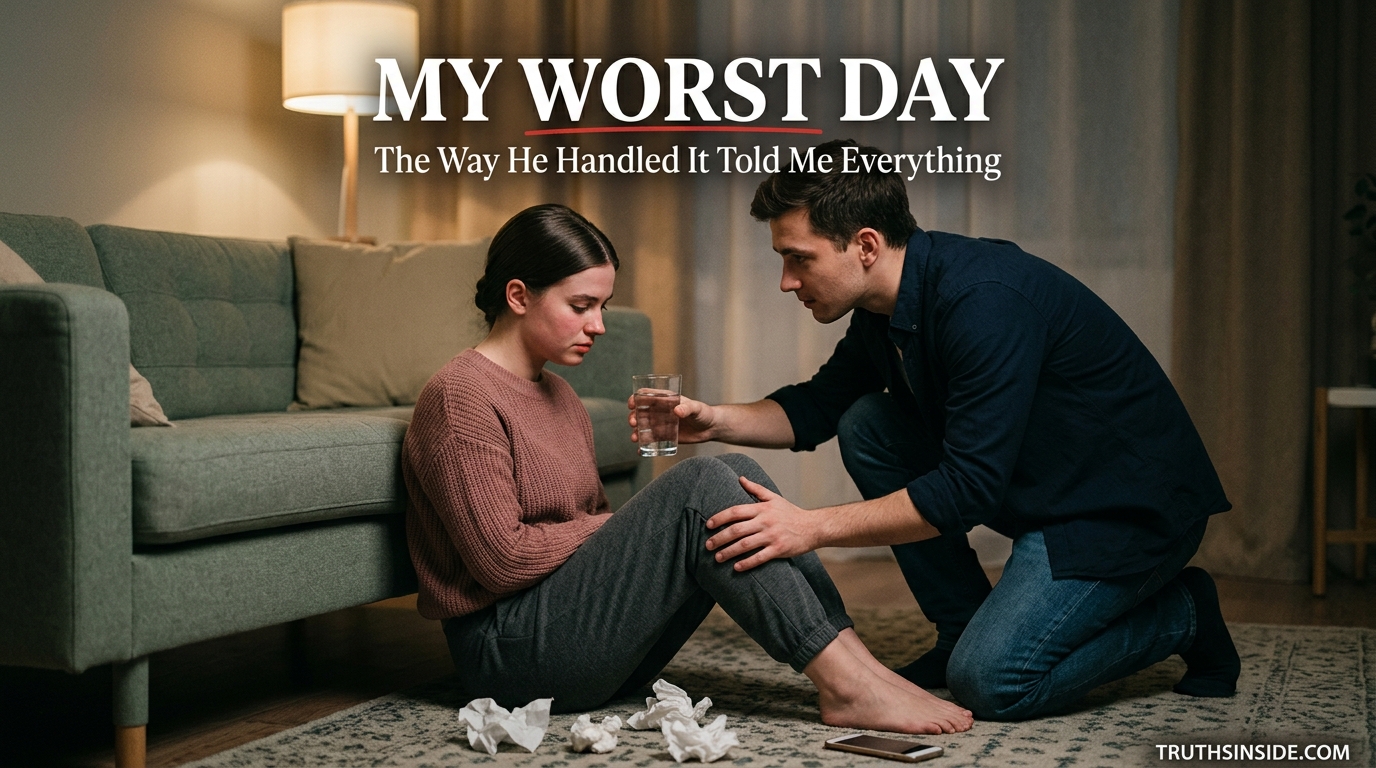
The Way He Handled My Worst Day Told Me Everything I Needed to Know
I lost my job, my grandmother’s health took a sudden turn, and I locked my keys in my car — all within eleven hours. It sounds almost comedic written out like that, but living through it felt like drowning. According to research from the American Psychological Association, how a partner responds during acute stress is one of the strongest predictors of long-term relationship satisfaction, often more revealing than months of ordinary, low-stakes interaction. I didn’t know that statistic when Mark walked through my door that evening. I just knew I was about to find out, without meaning to, exactly who he was on my worst day.
I hadn’t planned some kind of test. I wasn’t trying to evaluate him. I was simply too exhausted to perform composure anymore, and for the first time in our relationship, he was seeing me completely undone. What happened over the next few hours told me more about our future together than the entire six months before it.
This is the story of how one impossibly hard day accidentally became the clearest signal I ever received about a relationship — and why psychologists say the way someone shows up during your worst day matters more than almost anything else.
Why the Worst Day Reveals What Good Days Hide
Good days are easy to perform for. Anyone can be a decent partner over a nice dinner, on a sunny weekend, during a low-stakes disagreement about weekend plans. It’s the worst day — the ones with no warning, no time to prepare a version of yourself worth presenting — that strip away performance entirely. There’s no time to plan the “right” reaction. What comes out is simply what’s actually there.
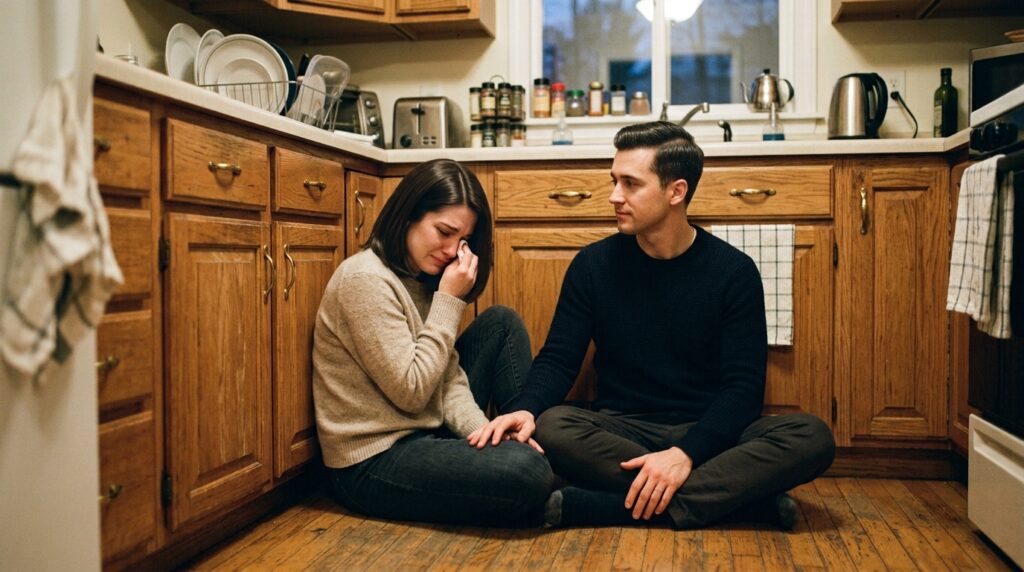
I’d read about this concept before, vaguely, the idea that crisis reveals character. But I hadn’t understood it viscerally until Mark walked in that evening and found me sitting on the kitchen floor, mascara down my face, unable to form a coherent sentence about what had happened. My worst day wasn’t dramatic in the movie sense — no emergency room, no tragedy. It was just an overwhelming pile of ordinary bad things happening at once, the kind that quietly tests a relationship far more than any single catastrophe.
Therapist and relationship researcher Dr. Sue Johnson has written extensively about “attachment moments” — brief windows during distress where a partner’s response either builds or erodes emotional safety. My worst day turned out to be exactly one of those windows, and I hadn’t even realized it was happening until much later.
📃 Related article: Red Flag I Mistook for Effort: 1 Costly Truth
What He Did Differently on My Worst Day
The first thing Mark did wasn’t ask what was wrong. It was sit down on the floor next to me, at my level, without saying anything at all for almost a full minute. I remember being surprised by that silence — most people, myself included, rush to fill discomfort with questions or reassurance. Instead, he just stayed there, present, letting me be exactly as unraveled as I was.
When I finally started talking, he didn’t try to fix anything immediately. He didn’t launch into solutions about my job or offer advice about my grandmother’s health before I’d even finished explaining what happened. He asked one simple question: “Do you want me to help solve this right now, or do you just need me to sit with you?” I hadn’t realized until that moment how rarely anyone had asked me that directly on a worst day instead of assuming which one I needed.
I told him I just needed him to sit with me, and he did — for almost two hours, without checking his phone once, without rushing me toward feeling better faster than I actually was. Psychologists call this “co-regulation,” the process of one nervous system helping calm another simply through steady, attuned presence. On my worst day, Mark didn’t fix a single thing. He just stayed regulated so I eventually could too.
“Do you want me to help solve this right now, or do you just need me to sit with you?”
The Small Signals That Added Up
It wasn’t just the big gesture of sitting with me that told me something important. It was the smaller details throughout my worst day that, looking back, revealed just as much. He quietly ordered food without asking what I wanted, correctly guessing the comfort meal I’d need based on things I’d mentioned in passing months earlier. He didn’t mention his own day at all, even though I later learned he’d had a difficult one too — he simply set it aside without making a point of the sacrifice.
He also didn’t try to talk me out of my feelings. When I said something irrational, exhausted, and probably unfair about my job loss, he didn’t correct me or defend the situation logically. He let me be wrong and overwhelmed without treating either as a problem to manage. Therapists often note that this kind of patience during a worst day is far rarer than people expect, because most partners, with good intentions, rush toward calming someone down rather than simply letting them feel what they feel.
By the time I finally went to bed that night, exhausted in a different way than when the day started, I remember thinking clearly, for the first time: this is what it actually feels like to be safe with someone. Not during the easy months. During the worst day I’d had in years.
📃 Related article: He Forgave Her: 7 Powerful Reasons Most Men Never Could
Why This Sign Matters More Than Grand Gestures
In the months since, I’ve thought a lot about why that particular evening mattered so much more than any romantic gesture Mark had made before it. Grand gestures are chosen. They’re planned, timed, often even a little performative, in the best sense of the word. A worst day offers no such preparation. There’s no time to decide what kind of partner to be — you simply are whoever you already are, under pressure.
This is why relationship therapists frequently encourage people to pay closer attention to crisis behavior than to romantic behavior when evaluating compatibility. A partner who’s wonderful during vacations and dinners but disappears, deflects, or centers their own discomfort during your worst day is showing you something important, even if it’s easy to excuse in the moment as “he’s just bad with emotions” or “she doesn’t do well with stress.”
I’d excused smaller versions of that pattern in past relationships, telling myself grand romantic gestures balanced out someone’s discomfort with my hard moments. What I understand now is that a single worst day, handled with genuine steadiness, tells you more about long-term compatibility than a year of curated good ones ever could.
“A single worst day, handled with genuine steadiness, tells you more than a year of curated good ones ever could.”

How to Watch for This Sign Yourself
If you’re early in a relationship and haven’t yet had a genuine worst day together, you can still watch for smaller versions of the same pattern. Notice how someone responds when plans fall apart unexpectedly, or when you’re simply in a bad mood with no clear explanation. Do they get impatient with your distress, or do they stay steady without needing you to perform gratitude for their patience?
It also helps to pay attention to whether someone asks what you need, rather than assuming. Mark’s simple question — solve it, or sit with it — is a small, replicable habit anyone can practice, and noticing whether a partner asks that kind of question during smaller stresses can be a useful preview of how they’ll show up during your actual worst day, whenever it eventually comes.
Finally, watch for whether someone makes your hard moments about themselves. A partner who needs constant reassurance that they’re helping “the right way” during your worst day is often, even unintentionally, redirecting the moment’s focus. The steadiest partners tend to be the ones who can tolerate not being thanked in the moment, simply because they’re focused on you instead of their own performance of support.
Where Things Stand Now
It’s been over a year since that evening, and Mark and I still occasionally reference it — not because the day itself was significant, but because of what it revealed. I’ve come to think of it as the moment I stopped evaluating our relationship by its highlight reel and started paying attention to what actually held steady underneath. My worst day wasn’t a test I designed. It simply happened to be the moment the truth became impossible to miss.
I’d encourage anyone in a new relationship not to wait for a crisis to evaluate someone, but also not to dismiss what happens when one arrives unplanned. The way someone handles your worst day — not your best one, not your most photogenic one — is often the clearest signal available about who they actually are, underneath every good day that came before it.

Frequently Asked Questions
Why does how someone handles a worst day matter more than good days?
Good days allow room for performance, while a genuine worst day removes the time to prepare a reaction, revealing someone’s actual instincts and character under real pressure.
What if my partner hasn’t been tested by a real worst day yet?
You can watch for smaller versions of the same pattern — how they respond to minor stress, canceled plans, or your bad moods — as a preview of likely behavior during a bigger worst day.
Is it fair to judge a relationship based on one difficult day?
One moment alone shouldn’t define everything, but a worst day often reveals consistent patterns rather than an isolated exception, especially when paired with other everyday behaviors.
What does “co-regulation” mean in this context?
It refers to one partner’s calm, steady presence helping regulate the other’s nervous system during distress — exactly what happened when Mark stayed present through the writer’s worst day without rushing her toward feeling better.
What’s the simplest way to support someone during their worst day?
Asking directly whether they want help solving the problem or simply want your presence, rather than assuming, is one of the most effective ways to support someone through their worst day.
If this story resonated with you, save it for later, share it with someone who needs to hear it, and follow Truthsinside.com for more real signs and signals stories.
🎵 Music
Maren Lull is a singer-songwriter who writes from the places most people don’t talk about out loud.
Not the dramatic grief. Not the obvious heartbreak. The quiet kind — the ordinary Tuesday emptiness, the habit of reaching for someone who isn’t there anymore, the particular exhaustion of being strong for so long that the strength itself wears thin.
Her music lives at the intersection of emotional honesty and soft beauty — breathy vocals over gentle piano, slow tempos, lyrics that feel less like songs and more like something you wrote in a private notebook at two in the morning and never showed anyone.
Maren Lull writes for the people who feel everything deeply and say very little about it. For the ones who listen to sad music not because they want to feel worse — but because being understood, even by a song, makes the feeling easier to carry.
📱 Follow Maren Lull:
→ Spotify
→ Apple Music
→ Youtube
→ Audiomack