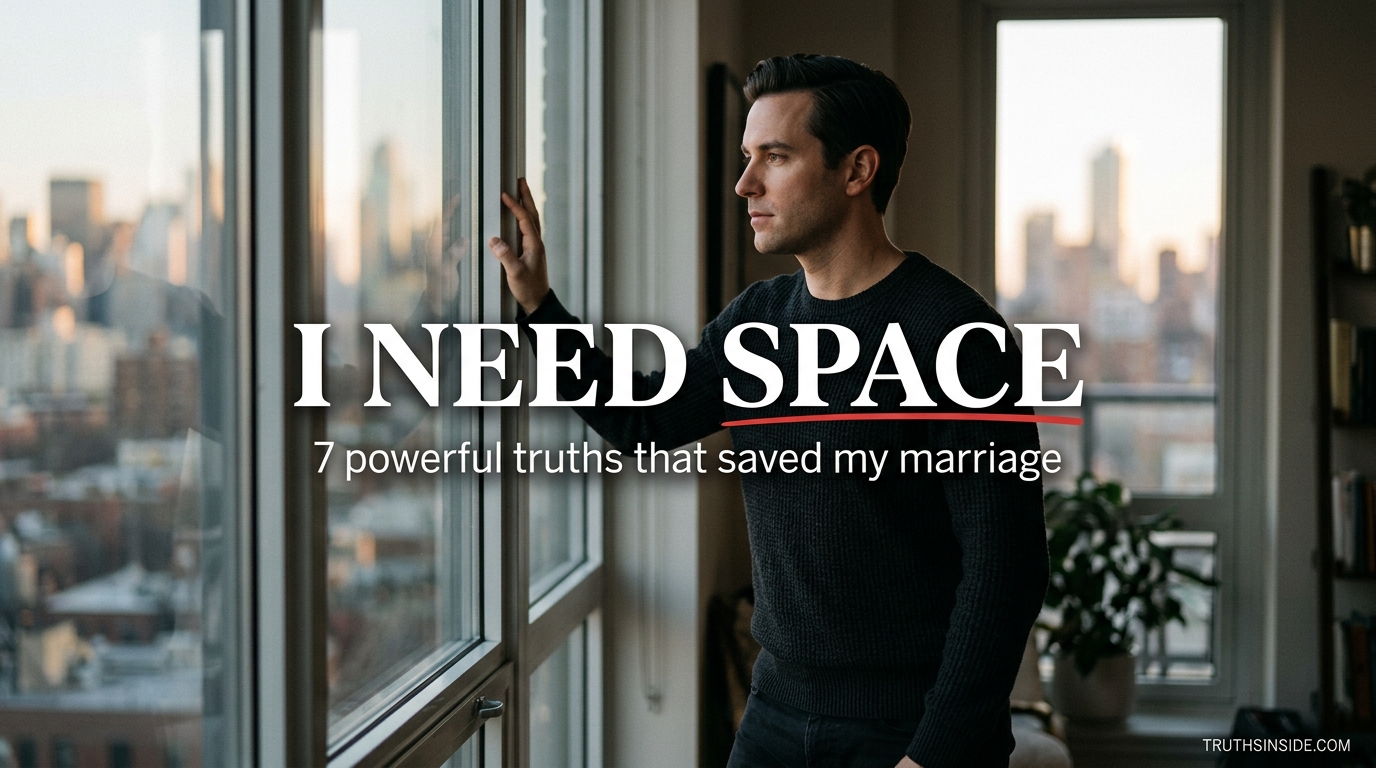
I Need Space: 7 Powerful Truths That Saved My Marriage
She stood in the kitchen doorway, arms crossed, and said four words that felt like a wrecking ball: “I need space.” My chest tightened instantly. Psychologists who study attachment behavior note that a partner’s brain can register emotional distance as a genuine threat, activating the same neural alarm system triggered by physical danger. In that moment, I wasn’t thinking about research. I was thinking about losing her.
Every instinct in my body told me to close the gap — to talk faster, explain more, hold on tighter. That’s what panic does. It convinces you that motion equals safety, that if you just say the right sentence, she’ll take it back. But I had learned, painfully, over years of getting this wrong, that chasing someone who says “I need space” almost always pushes them further away.
So that night, for the first time in my life, I did the opposite of what my body was screaming at me to do. I didn’t call. I didn’t text. I didn’t spiral into six paragraphs of justification at 1 a.m. I let the silence sit there, uncomfortable and unresolved, and I chose to trust that “I need space” wasn’t a countdown to abandonment — it was information. This is the story of what happened when I finally listened to it.
What “I Need Space” Really Means (Psychology Explained)
Most people hear “I need space” and translate it instantly into “this is over.” But relationship therapists consistently describe this phrase differently: as a nervous system request, not a verdict. When someone says I need space, they are often flooded — emotionally overwhelmed to the point where their prefrontal cortex, the part of the brain responsible for reasoned conversation, has essentially gone offline.
In Gottman Institute research on conflict, this state is called “flooding,” and it’s physiological, not personal. A flooded partner’s heart rate spikes, their thinking narrows, and productive conversation becomes almost impossible until their body calms back down. When my wife said I need space, she wasn’t rejecting me. Her nervous system was asking for a pause button so she could come back to the conversation as a person instead of a threat response.
Understanding that distinction changed everything. I need space is not the same sentence as “I need you gone.” But in the heat of fear, those two phrases sound identical, and that’s where most relationships go wrong.
📃 Related article: Just Protective: 8 Alarming Signs It Was Actually Control
Why My First Instinct Was to Fight for Closeness
I grew up believing that love meant proximity. If someone pulled away, you pulled them back. Distance felt like danger, so my default response to any version of “I need space” was to close it immediately — apologize, over-explain, or demand reassurance that everything was fine. I didn’t realize I was doing this through an anxious attachment lens until much later.
Attachment theory, first developed by psychologist John Bowlby and later expanded by researchers like Sue Johnson, explains this pattern well. People with anxious attachment styles often interpret a partner’s need for space as evidence of impending loss, which triggers protest behavior — calling repeatedly, seeking constant reassurance, or refusing to let the topic drop. It feels like love. It usually reads as pressure.
The irony is brutal: the more urgently I needed her to say “I don’t need space anymore, I need you,” the more space she actually needed. My anxiety was creating the very distance I was terrified of.
“The need for space is rarely a rejection of love — it’s often the only way a flooded nervous system knows how to protect the relationship from saying something it can’t take back.”
The Night I Chose Silence Over “I Need Space” Panic
The night she said it, I sat on the edge of our bed for almost twenty minutes doing nothing. That doesn’t sound dramatic, but for someone wired to fix things immediately, doing nothing was the hardest action I’d ever taken. I wanted to knock on the bathroom door. I wanted to text “can we talk?” I wanted anything except the unbearable quiet of not knowing.
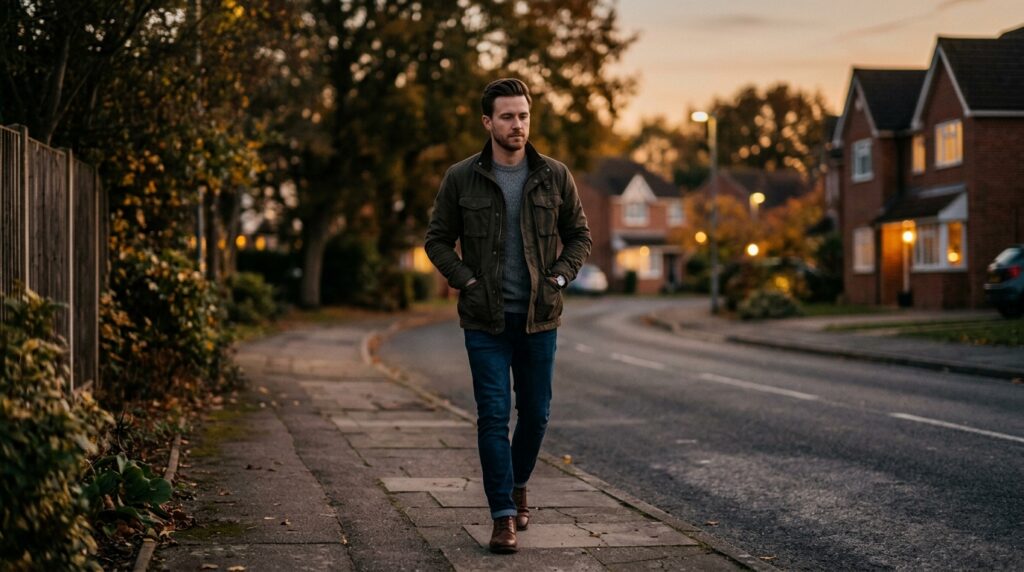
Instead, I wrote down what I was feeling on a notes app instead of sending it to her. I need space, she’d said, and my job in that moment wasn’t to convince her otherwise — it was to regulate myself so I didn’t make the moment worse. I went for a walk. I didn’t check my phone every ninety seconds, though I wanted to. I let the discomfort exist without trying to erase it immediately.
That single choice — tolerating distress instead of chasing relief — is something therapists call “self-soothing,” and it’s one of the most underrated relationship skills that nobody teaches us.
What Attachment Theory Says About Needing Space
Not everyone processes closeness the same way, and that’s the piece I was missing for years. Securely attached people can tolerate a partner saying I need space without spiraling, because they trust the relationship’s underlying stability even during a pause. Anxiously attached people, like I was, often can’t tolerate the ambiguity — silence feels like proof of catastrophe.
There’s also a third pattern worth naming: avoidant attachment, where a person genuinely needs physical and emotional distance to process big emotions before they can reconnect. My wife, I eventually learned through years of us both doing individual therapy, leans avoidant under stress. For her, “I need space” wasn’t manipulation or punishment — it was the only route back to feeling safe enough to talk.
Once I understood that her need for space came from a different nervous system wiring than mine, I stopped taking it personally. It wasn’t about me being unlovable. It was about two different stress responses colliding in the same kitchen.
The Science Backing “I Need Space” Requests
Research on physiological flooding, popularized by Dr. John Gottman’s decades of couples studies, found that once a person’s heart rate crosses a certain threshold during conflict, roughly 100 beats per minute, their ability to process language and empathize drops sharply. Continuing to argue at that point doesn’t resolve anything — it just adds fuel. Gottman’s own research suggests a minimum of twenty minutes is needed for the body to physiologically de-escalate before productive conversation can resume.
That number surprised me. Twenty minutes. Not twenty seconds of silent treatment before someone “gives in.” Actual physiological time for cortisol and adrenaline to drop. When she said I need space, she may have needed twenty minutes — or she may have needed the whole evening. Either way, respecting that window wasn’t weakness on my part. It was the scientifically supported version of patience.
“You cannot argue your way past a nervous system that hasn’t finished protecting itself yet — space isn’t the enemy of resolution, it’s often the prerequisite for it.”

How I Gave Her the Space She Needed (Without Disappearing)
Giving space doesn’t mean disappearing entirely, and that distinction matters more than people realize. I didn’t ghost her for three days out of spite or as a power move. I sent one short message the next morning: “Taking the space you asked for. I’m here whenever you’re ready, no pressure.” Then I let it go.
That single sentence did something I hadn’t expected. It told her I need space wasn’t a threat to me — I could hold it without punishing her with silence or flooding her with anxious follow-up texts. Therapists sometimes call this “leaning back without leaving.” I stayed emotionally present and available, just without pressure attached to my presence.
I also used the time productively instead of ruminating. I went to the gym. I called a friend. I didn’t sit by the phone refreshing our messages. Giving someone the I need space they asked for while still living your own life sends a quiet, powerful message: I trust this relationship enough not to panic.
📃 Related article: He Forgave Her: 7 Powerful Reasons Most Men Never Could
What Happened After I Stopped Chasing and Started Trusting
She came to me the next evening, not because I pressured her, but because the space had done its job. She said she’d felt suffocated, not by me specifically, but by the intensity of always needing to manage my reactions on top of her own feelings. Hearing that stung, honestly. But it also explained so much about why I need space had become a recurring sentence in our relationship.
We talked for almost two hours that night — the calmest, most honest conversation we’d had in months. Not because the problem disappeared, but because both of our nervous systems had finally caught up to the conversation instead of running from it. I need space, it turned out, was never really about me. It was about her needing room to hear her own thoughts before she could share them with mine.

Signs Your Partner’s “I Need Space” Is Healthy, Not a Red Flag
Not every request for distance is a warning sign, though it’s fair to want reassurance. A few things help distinguish healthy space from something more concerning. First, healthy space comes with some form of reconnection commitment — a “give me tonight” or “let’s talk tomorrow,” rather than total silence with no timeline. Second, healthy space doesn’t include contempt, stonewalling as punishment, or refusal to ever revisit the issue.
Third, and this one took me the longest to learn: healthy space is about regulating emotion, not avoiding accountability. If someone says I need space and then genuinely returns ready to talk, that’s regulation. If space becomes a permanent escape hatch every time something hard comes up, that’s a pattern worth addressing directly, ideally with a couples therapist who can help both partners feel heard.
The difference isn’t always obvious in the moment. But over time, you can usually tell whether space is being used to protect the relationship or to avoid it entirely.
Frequently Asked Questions About “I Need Space”
Q: What does it mean when someone says “I need space”?
It typically means their nervous system is emotionally flooded and needs time to regulate before productive conversation is possible. It’s rarely an immediate signal that the relationship is ending.
Q: How long should I give someone who says I need space?
There’s no universal number, but research on physiological flooding suggests at least twenty to thirty minutes for the body to calm down, and sometimes a full day depending on the intensity of the conflict.
Q: Is “I need space” a breakup line?
Not usually. Context matters — tone, history, and whether there’s a stated intention to reconnect all shape whether I need space is a pause or a goodbye.
Q: Should I text them while they have space?
One brief, low-pressure message acknowledging their request is generally fine. Repeated messages or calls tend to backfire and can make someone feel more suffocated, not less.
Q: Does needing space mean someone has an avoidant attachment style?
Not necessarily. Anyone under enough stress can need space temporarily. It becomes a pattern worth examining only if it consistently replaces communication rather than preceding it.
If this story helped you understand what “I need space” really means, save it for the next time panic tries to talk you into chasing. Share it with someone who needs to hear that space isn’t the end of love — it’s sometimes how love survives. And follow Truthsinside.com for more real stories on relationships, psychology, and the truths hiding beneath the surface.
🎵 Music
Maren Lull is a singer-songwriter who writes from the places most people don’t talk about out loud.
Not the dramatic grief. Not the obvious heartbreak. The quiet kind — the ordinary Tuesday emptiness, the habit of reaching for someone who isn’t there anymore, the particular exhaustion of being strong for so long that the strength itself wears thin.
Her music lives at the intersection of emotional honesty and soft beauty — breathy vocals over gentle piano, slow tempos, lyrics that feel less like songs and more like something you wrote in a private notebook at two in the morning and never showed anyone.
Maren Lull writes for the people who feel everything deeply and say very little about it. For the ones who listen to sad music not because they want to feel worse — but because being understood, even by a song, makes the feeling easier to carry.
📱 Follow Maren Lull:
→ Spotify
→ Apple Music
→ Youtube
→ Audiomack